Something heavy is walking across your ceiling at 2 a.m. The soffit has a fresh hole. A copperhead has decided the patio is his now. Call once and you are talking with a South Carolina permitted wildlife control operator who covers your ZIP code, with a real price on the call and no obligation to book.
Pick the animal, read what the job actually involves, then call. Every page tells you what a permitted operator does, what it tends to cost and what South Carolina law says about it.
Heavy footsteps after dark, a torn soffit, a latrine in the insulation. Trapped and sealed out by a permitted operator, kits handled properly.
Scratching at dawn and dusk, chewed fascia, a nest by the chimney. One-way doors, sealed entry points, and yes, they chew wires.
Protected animals and a strict SCDNR calendar. Done with one-way exits in spring or fall, never by an exterminator with a fogger.
Copperheads are the Midlands' most common venomous snake. An operator identifies, removes and tells you why it was there.
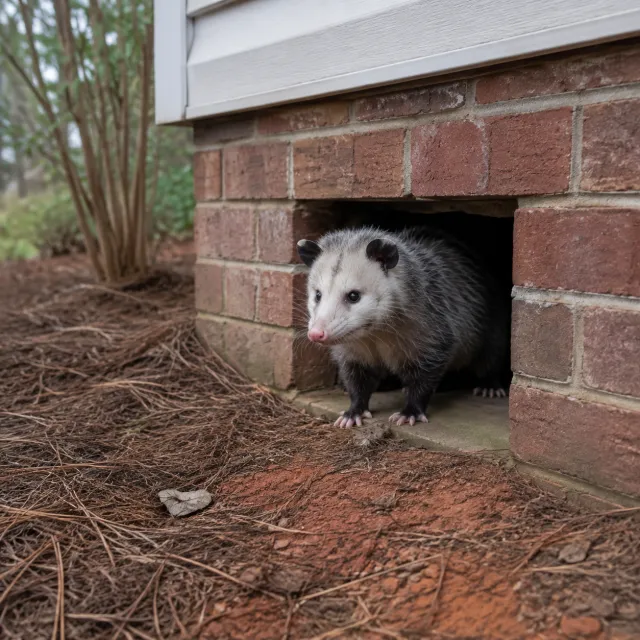
Crawl-space squatters, something under the deck, and the smell in the wall nobody wants to find the source of.
Inspection, trapping, exclusion, attic cleanup and repair, with 2026 price ranges and the South Carolina rules in one place.
South Carolina treats paid wildlife trapping as regulated work. Anyone charging a fee to remove nuisance animals needs a Wildlife Control Operator permit from the South Carolina Department of Natural Resources (SCDNR), and SCDNR keeps a public list of who holds one. We only route calls to operators on that footing, so the person on your ladder is authorized to be there, not a handyman with a cage trap and good intentions.
The permit is not paperwork for its own sake. SCDNR is explicit that routine relocation of wildlife is against state law, so a captured raccoon is released on your property or humanely euthanized, never driven to a park across town. And the rabies math is real: the South Carolina Department of Public Health confirmed 101 rabid animals statewide in 2025, most of them raccoons, skunks, foxes and bats. A permitted operator knows the handling rules cold. Your neighbor's cousin with a trap may not.
Describe what you are hearing or seeing, get a price and a time window on the call. No forms, no obligation.
Call (855) 629-1061The number rings through to an independent wildlife control operator that covers your ZIP code in Richland or Lexington county.
Where the noise is, what time of day, what you have seen. Attic thumping at night and scratching at dawn point to different animals, and the operator will know which.
A quote and the earliest visit they can offer. Book it or sleep on it. We are paid by the provider network when a call connects, which is why you never pay us.
Columbia proper (Shandon, Forest Acres, Rosewood, the Northeast), Lexington, Irmo, West Columbia, Cayce, Blythewood, Chapin, Elgin and the rest of Richland and Lexington counties. The oak-and-pine neighborhoods around Lake Murray and the older streets inside I-77 generate most of the attic calls we hear about. Just outside the circle? Call anyway. Operators set their own maps and several drive further than you would guess.
Most single-animal jobs in the Columbia area land between about $200 and $600, and Angi's 2026 national data puts the typical wildlife removal bill at $191 to $576 with an average of $378. An attic job that includes trapping, sealing every entry point and cleaning up droppings runs higher, commonly $500 to $1,500. The price you get on the call is free and carries no obligation.
Yes. Anyone who charges a fee to trap or remove nuisance wildlife in South Carolina must hold a Wildlife Control Operator permit from the South Carolina Department of Natural Resources (SCDNR). We only connect you with operators who hold that permit. Ask to see it; a real operator will not blink.
No. SCDNR states plainly that it is against state law to routinely relocate wildlife, and no permitted operator may move a captured animal to another location. Trapped animals are released on the property where they were caught or humanely euthanized. An operator who promises to drive your raccoon to the country is telling you something about their permit.
Bats are excluded, never trapped, and SCDNR's guidance is to do it in early spring (March and April) or in fall (August through October). Exclusion is not done from May through mid-July, because flightless pups would be sealed inside the roost. A permitted operator will tell you the same thing before taking your money.
Columbia, Lexington, Irmo, West Columbia, Cayce, Blythewood, Forest Acres, Chapin and the rest of Richland and Lexington counties. If you are a little outside that circle, call anyway. Operators set their own service maps and several drive further than you would expect.
Call now and a permitted Columbia-area operator gives you a wildlife removal price on the spot, with no obligation.